
The Menominee Indian Tribe of Wisconsin are an Algonquin speaking Tribe and are the oldest living Residents, going back 10,000 years, in a place called Wisconsin. The people received their name, “Wild Rice People” (Menominee) from neighboring Algonquin relatives. The first recorded inhabitants of the Menominee river basin as noted in Journals by explorers from the seventeenth and early eighteenth centuries was that a tribe of about 40 to 80 men were found to be living in a single village at the mouth of the Menominee river. *1
Menominee Tribel Clan System
The Menominee culture formed a clan system to address issues vital to the survival of the community. Their culture is the origin of how the clans came to exist. Their order and their function within the society. The 5 Clans are as follows.
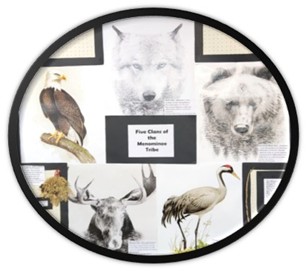
- The Wolf Clan – (Mahwow) Were the excellent hunters and gatherers. The wolf prepares for the hunt. Their primal obligation within the tribe is to harvest resources.
- The Ancestral Bear Clan – (Awosaeh} The speakers for the people and the keepers of the law. The Bear called the tribe together for council meetings and opened the deliberations that followed in an orderly fashion.
- Eagle or Thunder Clan – (Kenew) Administered justice and freedom. Principal of the clan. Served as warriors and laborers. They had the duty of performing ceremonies associated with war and planning military strategies.
- Moose Clan – (Mos) administered individual and community security. The moose supervised the harvest of wild rice and made sure that the crop was equally distributed among the members.
- Crane Clan – (Otociah) were constructors and architects. The crane had to master knowledge of making things out of materials presented to them by nature.
Tribal Duties
Women’s
- Harvesting the Wild Rice
- Planting and Harvesting squash, beans and corn
- Gatherers of berries, nuts, wild herbs and fungi
- Tap the Maple trees for Maple syrup and sugar
Men’s
- Hunters and fisherman – Whitetail Deer, bear, fox etc. and sturgeon
- Cutting and stacking wood for tribe
Interesting facts
- Menominee lived in domed wigwams and rectangular lodges with bark covering
- The sturgeon was celebrated with an annual ceremony – Keshena
- Sturgeon has a mythological importance often described as the Father of the Menominee.
- Europeans introduced the Native Americans to cloth and linen for clothing and glass beads for beadwork as well as tools such as metal knives, needles, copper pots, firearms and woolen blankets. For these items Native Americans would trade fox, ermine and sable to decorate clothing and Beaver pelts that were used to fashion all men’s hats.
- Native women were taught the art of beading by Ursuline nuns who accompanied missionaries.
- A seasonal treat for the Menominee was cooked wild rice with maple syrup and berries.
- The crops of Squash, corn and beans were called ” The Three Sisters” because they thrived together like three inseparable sisters. some believed “The Three Sisters” represented the Holy Trinity of the indigenous culture.
The Art of Native American Beading
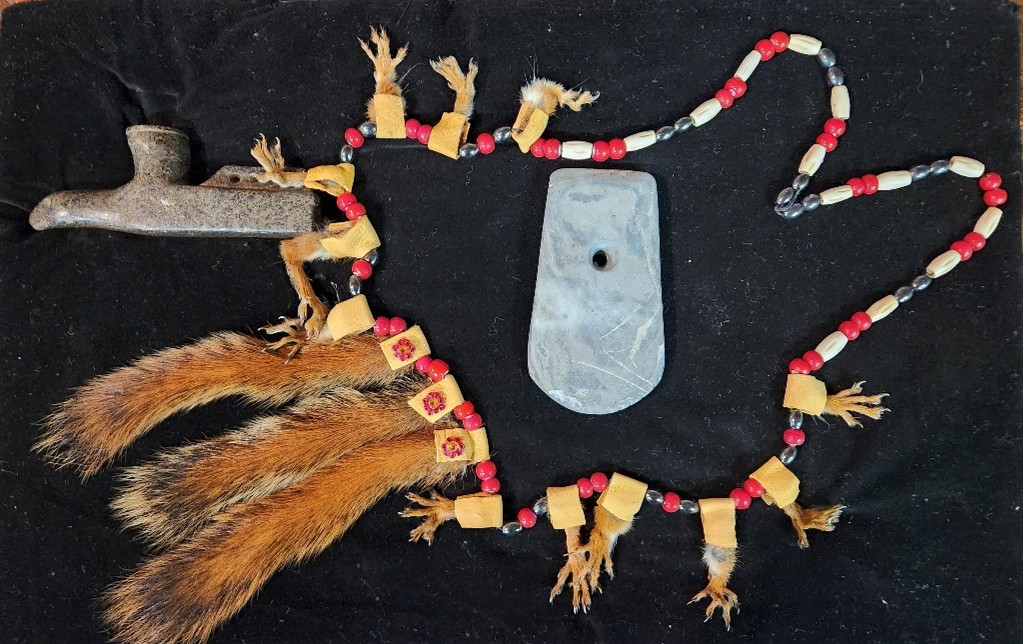
The Squirrel Necklace: This reproduction of a ceremonial Red squirrel paw and tail necklace was made with French black and white glass beads was strung on sinew. Spaces are made from tanned deer hide with sewn on red beads. The squirrels which were harvested for their meat and furs left the tails and feet to be used for decorative effect.
The Gorget, the polished stone in the center of the display. These pieces were worn around the throat and neck and could be highly decorated. They were developed as a badge that showed rank. Although the Gorget is authentic the age off this polished stone is unknown.
The Native American Woodland Pipe in the upper left side of the display was considered very sacred and was used to open negotiations between different Nations. The age of this pipe is unknown but was unearthed in a farmer’s field in Illinois. It is carved from black river stone in the shape of a Raven. The Raven’s symbolism was very complex. It was often associated with loss or ill omen, as a talking bird representing prophecy and insight or acting as a psychopomp (a spirit, deity, person who connects the material world to the afterworld.)
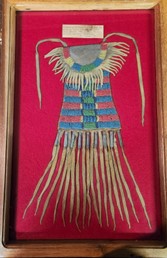
The Strike-A-Lite bag was created and used to carry flint and steel and other items to light and strike fires. The bags were decorated with beads and porcupine quills. Attached to the bag was a handle or strap to hang it from there sash or belt. This seed beaded bag was sewn by hand to brain tanned leather. Brain tanning leather is the oldest method in tanning. It was done by soaking de-haird animal hides in a mixture of water and natural fats and enzymes from animal brains. The longer it soaked the softer the hide.
View these Displays and much more on your next visit to Marinette Counties Historical Museum!
*1 – some information in this article provided Marinette County Wisconsin WIGenWeb
 Marinette County Historical Society